- Peace and Environment News
- Posts
- Plant-Based Pathways
Plant-Based Pathways
Rethinking Food at the Municipal Level

Aïda Warah, Ph.D
March 25, 2026
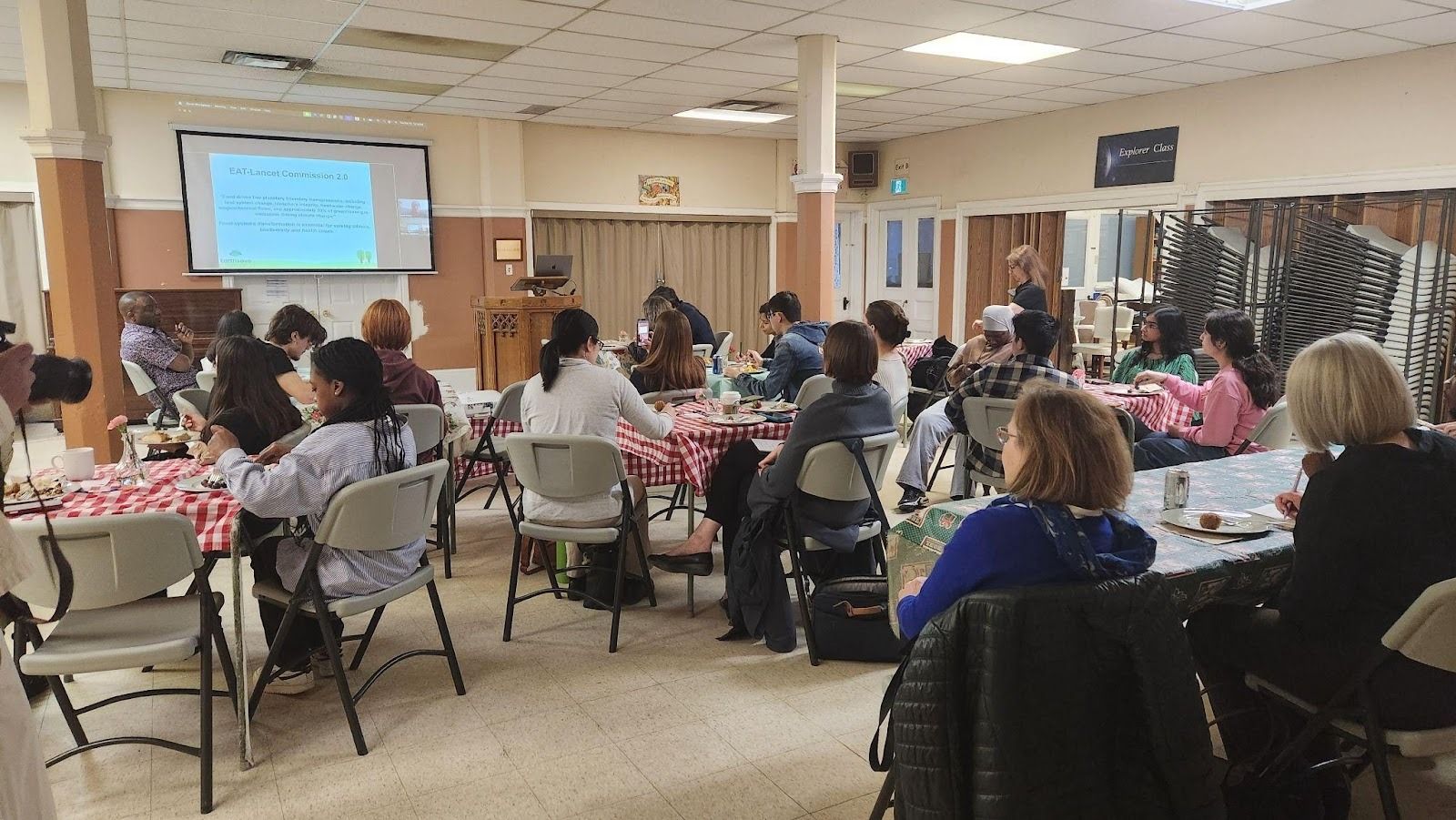
Image Credit: Aida Warah
On March 10, 2026, GentleWays for OurPlanet, in collaboration with Plant-Based Cities Movement, EarthSave, University of Ottawa Sustainability Centre, Plant-Based Canada, and Veg Ottawa, co-hosted a Lunch & Learn focused on the role of food systems in advancing climate and public health goals at the municipal level.
The session brought together city councillors, municipal staff, and students from the University of Ottawa in an educational and exploratory setting. The intention was to share emerging evidence and open a space for informed dialogue.
Presentations drew on recent international reports, including findings from 2025 highlighting the significant impact of food systems on greenhouse gas emissions and planetary health. Globally, food systems are responsible for roughly one-third of human-caused greenhouse gas emissions, with a substantial share linked to agriculture and particularly to animal-based production. Food systems, particularly institutional procurement, represent an important area that can be more strategically leveraged within climate strategies.
Participants were also introduced to examples from other Canadian cities that have begun integrating plant-based approaches into municipal operations. These include initiatives such as adjusting procurement policies, increasing plant-based options in public facilities, and embedding sustainability criteria into food-related decision-making.
“Food systems, particularly institutional procurement, represent an important area that can be more strategically leveraged within climate strategies.”
GentleWays for OurPlanet and its partners view this gathering as one step in an ongoing process. Since its foundation, GentleWays has promoted the inclusion of more plant-based meals in everyday diets as a practical way to reduce greenhouse gas emissions. Over the past two years, it has also worked directly with local restaurants to encourage the addition of plant-based options to their menus—an effort aimed at making these choices more accessible and widely available.
By situating these examples within a broader context, the session invited attendees to consider how similar approaches might be thoughtfully adapted within Ottawa’s local realities.
The discussion that followed reflected a genuine interest in understanding both the opportunities and the practical considerations involved. Questions centered on feasibility, public engagement, and how such initiatives could align with existing municipal priorities. Creating space for shared learning and respectful exchange is essential to supporting municipalities as they explore pathways toward more sustainable and health-promoting food systems.
As the evidence continues to deepen, one message becomes increasingly clear: our food choices shape not only our health, but the health of the planet. Attending to this connection opens the door to thoughtful, attainable shifts, beginning right where we are.

Reply