- Peace and Environment News
- Posts
- January 2026
January 2026
New Recycling Program; Solar and Battery Energy Storage Projects; Birds in Winter

Christopher Bonasia
February 01, 2026
Hello,
Happy New Year!
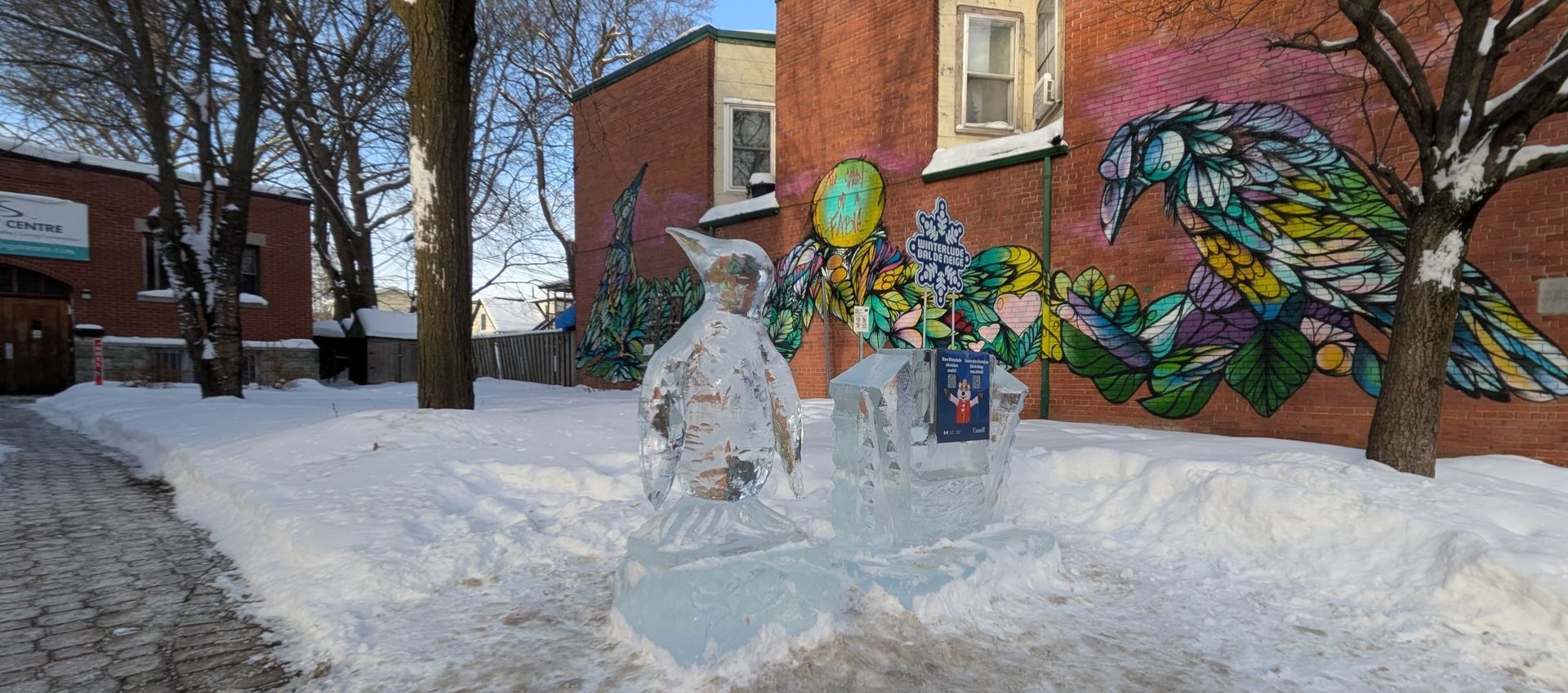
Image Credit: C. Bonasia
With the new year came a new, province-wide recycling program. Blue and black bin recycling is carried out by Circular Materials—and contractor Miller Waste Services is responsible for collecting recycling from curbsides—as of January 1, the City of Ottawa announced.
I’d say that people are happy about it, but that would be false.
In fact, the change got off to a bumpy start, and residents have been confused about what the changes entail and whether they need a new bin.
Blue and black bins are being collected on the same day, though maybe not at the times people have gotten used to. And no, residents don’t need new bins, though the Ottawa Citizen recently wrote that Circular Materials is directing Ottawa residents who request new recycling bins to pick one up themselves from one of two locations across the city; either northwest of Stittsville on Walgreen Road, or on Bantree Street in the east-end Trainyards area.
There are some new items that can be recycled, including flexible plastic packaging like plastic bags, chip bags and bubble wrap; foam packaging, such as from meat trays or takeout containers; and empty tubes from toothpaste, deodorant, and hand cream.
But what can’t be recycled, which people are used to being able to, are alcohol containers. Empty alcohol bottles must now be brought for deposit to Beer Stores or participating grocery stores.
“The regulation for Ontario’s new extended producer responsibility (EPR) blue box program specifically excludes the collection of alcohol containers from the blue box, which is why we are directing residents not to include alcoholic beverage containers in their blue box. All alcohol containers, regardless of size, should be returned for a refund through the Ontario Deposit Return Program (ODRP),” Allen Langdon CEO of Circular Materials, said in a statement to CTV News Ottawa.
“As we work to enhance Ontario’s recycling system, our goal is to ensure a seamless transition for Ottawa residents, with residents experiencing no impact to their curbside recycling routines.”
But the change comes as many Beer Stores have been closing—and although grocery stores with alcohol licenses were initially going to be required to take empties, a later agreement means that the won’t have to. This CBC article looks at how finding a place to return empty alcohol containers in Ontario is getting harder.
More information about what can be recycling is available on the Circular Materials website.
Stories From the PEN!
This month’s stories from the PEN include:
An article from The Energy Mix, discussing several new planned solar and battery energy storage installations approved by the City, and some shortcomings in the province’s process for selecting new energy projects.
Lynn Jones writes about The Surprising Benefits of Feeding Birds in Winter.

Image Credit: C. Bonasia
From the PEN Archives
The 2013 January - March edition of the PEN included an article by Ryan Moore, Bill Ends Protection for Canadian Waterways. Moore’s article discussed the 2012 Bill C-45, through which the Harper government effectively gutted the Navigable Waters Protection Act (NWPA)—an action that Moore claimed would leave 99% of Canadian waterways unprotected.
“Introduced in 1882, the NWPA is one of Canada’s oldest pieces of legislation. It ensures that activities that could potentially hinder navigation will trigger an environmental assessment under the Canadian Environmental Assessment Act.
These types of environmental assessments are what make this piece of legislation important. The NWPA has been foundational in environmental law for generations.”
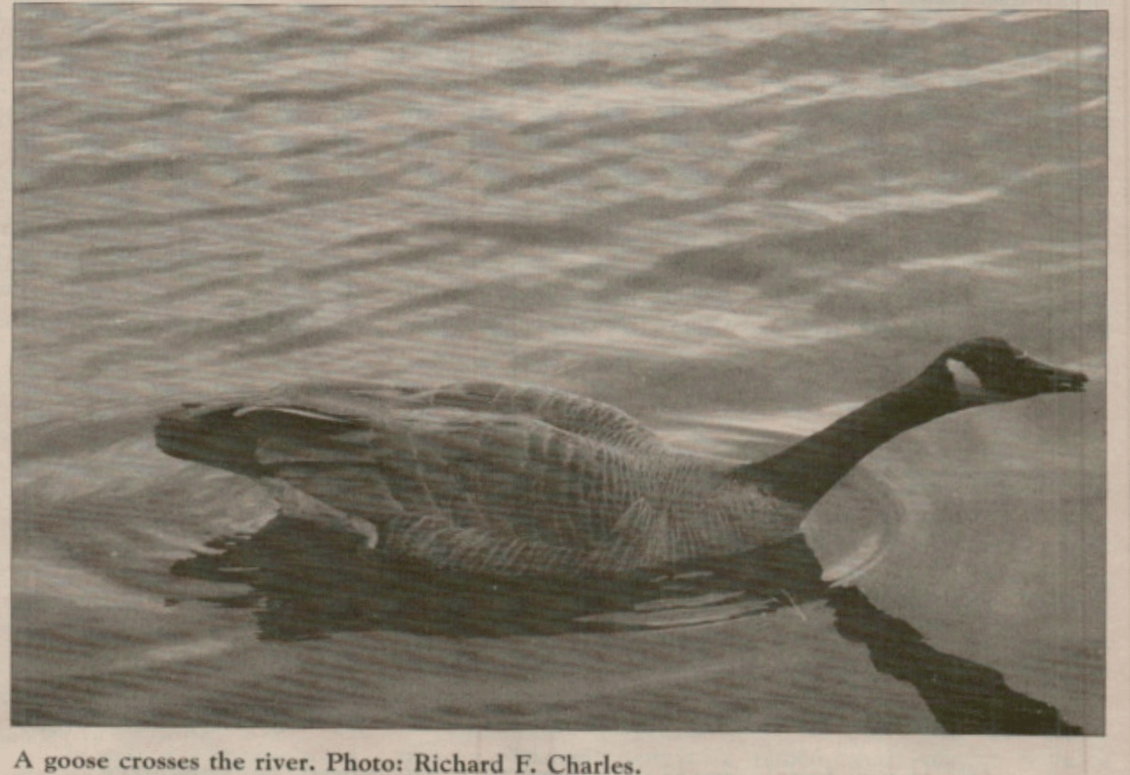
A Goose Crosses the River. Peace & Environment News, January - March 2013
Editor’s note: West Coast Environmental Law (WCEL) writes that, after Bill C-45 was passed, only 64 rivers, 97 lakes, and the three oceans were left with protections from development that restricts their navigability. In 2015, the government did launch a review and public consultation process to accept input on the Act, and eventually introduced Bill C-69 to restore the legislation to its original name as the Canadian Navigable Waters Act. But “Unfortunately, the amendments in the Bill do not live up to the government's promise to restore lost protections of waterways,” WCEL says. “The restored legal protections are narrowly focused, exclude environmental values, and in many cases are substantially weaker than the pre-2012 version of the law.”
Other News
A local petition in New Edinburgh is trying to stop the National Capital Commission’s plan to redevelop Sussex Drive, reports the Ottawa Lookout.
The Green Party of Ontario wants you to know that Ontario is losing 319 acres of farmland every year, caused by “Urban sprawl, aggregate mining, and wasteful highway projects like Highway 413.”
The Moving Surfaces sculpture on top of the berm at Lansdowne has been removed to storage. CBC writes that the artist who made the installation, Jill Anholt, is worried for its future.
Mark Sutcliffe says the City will address the housing shortage by removing red tape, CTV News reports.
On online petition has called on the city to use beet brine to de-ice its roads, rather than salt. Beet brine would be better for waterways. But at the same time, it is sticky, critics say.
More about road salt alternatives can be found in this CBC article.
Just before Christmas, bunch of people dressed up as Santas and elves robbed a grocery store in Montreal, The Guardian reported at the time. The group that coordinated the heist, called Robins des Ruelles, said “the stunt was intended to highlight cost of living crisis.”
The weather has been really cold lately. So, Environment and Climate Change Canada released a cold warning for the night of Thursday, January 29, for frigid temperatures and expected wind chills of -33°C to -38°C.
A study from the University of Ottawa found that climate change is affecting the quality of nectar that monarch butterflies rely on during migration, says Education News Canada.
CTV News reports that Canadian road salt is being shipped to the U.S., even as municipalities in Ontario are running low.
The Ottawa Lookout has a rundown of what will cost more in Ottawa in 2026.
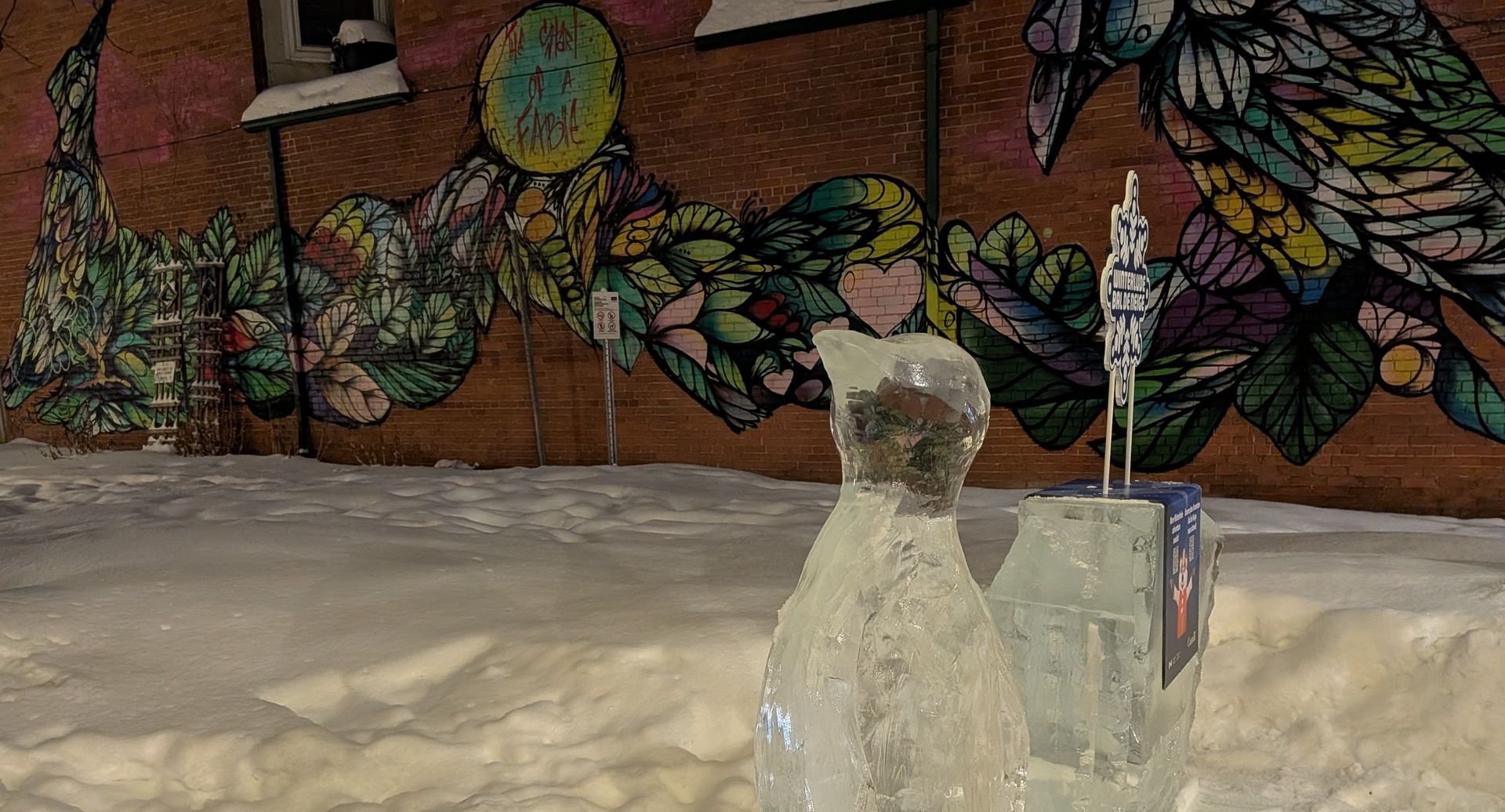
Image Credit: C. Bonasia
I look forward to connecting with you again next month through the PEN Newsletter. In the meantime, please use the comments section of the newsletter or email [email protected] with thoughts or questions.
—Christopher Bonasia, PEN editor
PERC appreciates all of our readers for giving us this chance to connect with members of our community, and we love being able to provide you with a forum to discuss pressing environmental and social justice issues.
But we also rely on your support to make this happen. If you are interested in helping our organization continue to use storytelling and networking to help individuals, non-profits, and community groups work locally for a greener and more peaceful world, please consider making a donation to the Peace and Environment Resource Centre.
Reply